

Packing Hacks for Every Room: How to Ensure Your Belongings Arrive Safely
Room-by-room packing tips for moving: kitchen, bedroom, bathroom, garage. Self-packing saves 1-2 hours. $135-$225/hr. Call 561-510-7191.
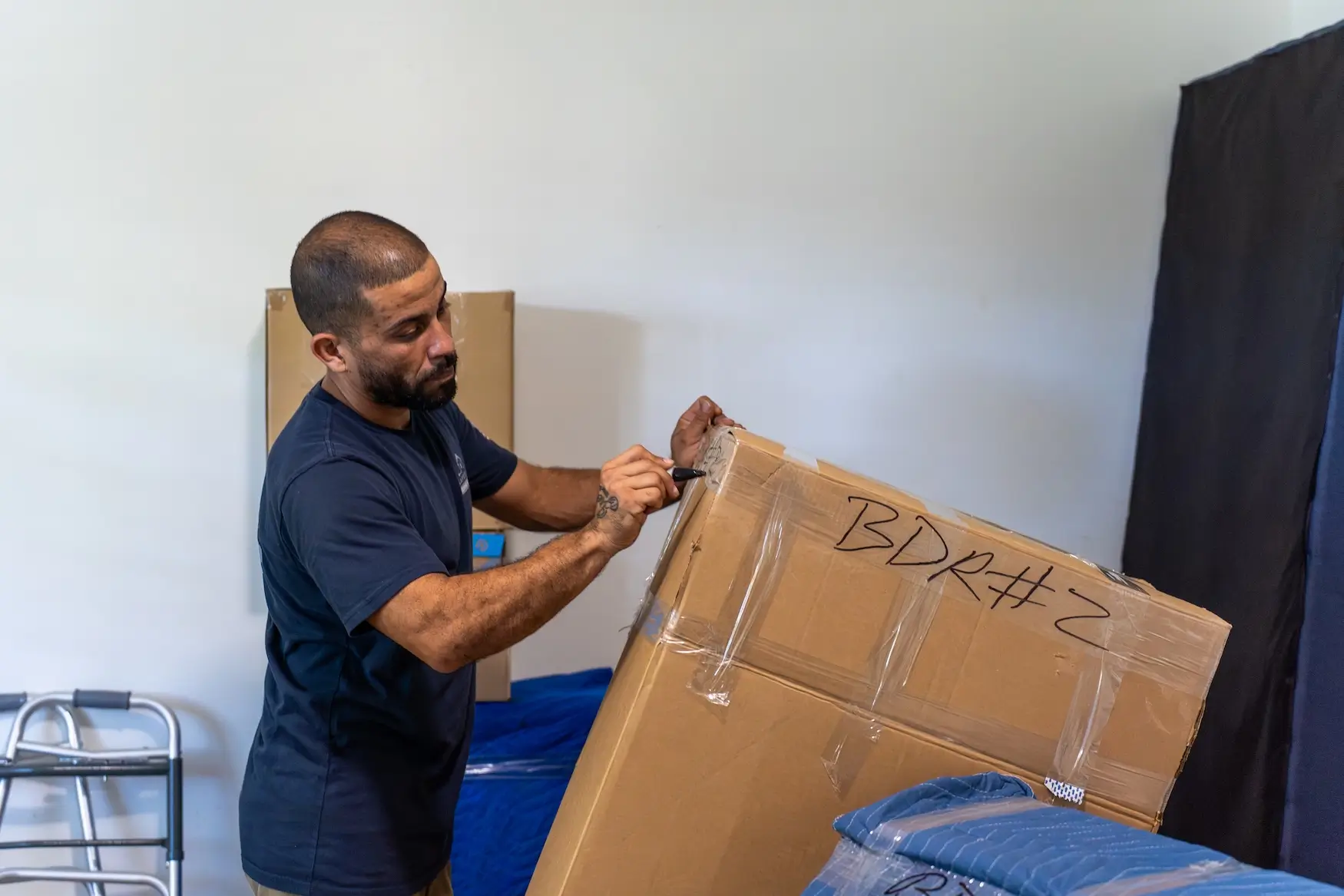
These packing tips can save real money. Self-packing before moving day cuts 1 to 2 hours off the total job time, and at $135 to $225 per hour that translates to $135 to $450 in savings. The tradeoff is your own time and the risk of breakage if items are packed incorrectly. This guide covers what to pack first, which rooms take the most time, and the techniques professional packers use to prevent damage during transport.
When to Start Packing
Start packing 2 to 3 weeks before moving day. Begin with rooms and items you use least: guest bedrooms, storage closets, bookshelves, and seasonal items. Leave the kitchen, bathrooms, and daily-use items for the final 2 to 3 days. Safebound Moving & Storage recommends labeling every box with the destination room name at the new home, not just "kitchen" or "bedroom," so the crew places boxes in the correct room without asking.
Packing the Kitchen
The kitchen takes longer to pack than any other room because of fragile items, odd shapes, and heavy appliances. Pack plates vertically like records, not stacked flat. Wrap each plate in packing paper and stand them on edge inside a dish-pack box. Glasses get individual paper wrapping and go in cell dividers or nested inside each other with paper between layers.
Small appliances (toaster, blender, coffee maker) go in their original boxes if available. If not, wrap them in packing paper and cushion with towels or dish cloths you were packing anyway. Knives go in a blade guard or wrapped individually in cardboard secured with tape.
Pots and pans nest inside each other with paper between them. Fill empty space inside pots with dish towels or oven mitts. Label kitchen boxes as "fragile" so the crew stacks them on top, not under heavy boxes.
Packing Bedrooms and Closets
Hanging clothes stay on hangers and go directly into wardrobe boxes. A standard wardrobe box holds 20 to 24 hangers. Dresser drawers can stay full of folded clothing if the dresser is not too heavy for the crew to carry safely. Ask your moving coordinator whether to leave drawers loaded or empty them.
Bedding, pillows, and linens fill garbage bags or vacuum-seal bags. These make good padding around furniture inside the truck. Shoes go in their original boxes or paired together in a medium box with paper between them.
Packing Bathrooms
Seal every bottle with plastic wrap under the cap before packing. Liquids leak during transport, and one open shampoo bottle can damage an entire box of towels. Group toiletries in zip-lock bags. Medicine goes in a separate bag that stays with you in the car, not on the truck.
Packing the Garage and Outdoor Items
Drain all fuel from lawn mowers, trimmers, and generators before packing. Federal regulations prohibit movers from transporting gasoline, propane, or any flammable liquid. Pool chemicals, paint thinner, and ammunition also cannot go on the truck. Hand tools go in small boxes because they get heavy fast. Power tools go in their original cases if available.
Materials You Need
A typical 2-bedroom home requires 30 to 40 medium boxes, 10 to 15 small boxes, 5 to 10 large boxes, 2 to 3 wardrobe boxes, 3 rolls of packing tape, and 5 pounds of packing paper. Safebound provides packing materials with full-service moves and offers a full professional packing service for residents who prefer the crew to handle everything. Call 561-510-7191 or get a free quote.
Professional Packing vs Self-Packing
Professional packing adds 2 to 4 hours to the total job, depending on home size. The crew handles wrapping, boxing, and labeling every item. The advantage is speed and breakage protection: professional packers wrap faster and use techniques that reduce damage claims. Self-packing saves money but requires 1 to 2 weeks of your own time. Most Safebound customers pack their own boxes and let the crew handle furniture wrapping, loading, and transport.
Safebound Moving & Storage has completed 35,000+ moves with a 4.9-star rating from 2,401 Google reviews. Get a free quote or call 561-510-7191.
Frequently Asked Questions
What is the 5 4 3 2 1 packing rule?
The 5-4-3-2-1 rule is a guideline for packing a suitcase or travel bag: 5 tops, 4 bottoms, 3 accessories, 2 pairs of shoes, 1 hat or jacket. For a full household move, the principle applies as a mindset for limiting what you keep. Before packing each category, ask whether you need all of it at the new home. Fewer items means fewer boxes, fewer hours on the clock, and a lower moving bill.
How long before a move should you start packing?
Start packing 2 to 3 weeks before moving day. Pack non-essential rooms first: guest bedrooms, storage areas, bookshelves, and seasonal items. Leave the kitchen, bathrooms, and daily-use items for the last 2 to 3 days. If you prefer professional packing, Safebound's crew handles everything the day before or morning of the move.
What is the 3 3 3 rule for packing?
The 3-3-3 rule is a travel packing guideline: 3 bottoms, 3 tops, 3 accessories. For a household move, a similar principle applies to decluttering. If you haven't used an item in the last 3 months, worn it in 3 seasons, or thought about it in 3 weeks, consider donating it rather than packing and shipping it to the new home.
How to strategically pack for a move?
Pack room by room, starting with the rooms you use least. Label every box with the destination room at the new home. Pack heavy items in small boxes and light items in large boxes. Wrap fragile items individually. Keep an essentials bag with chargers, toiletries, medications, and a change of clothes for the first night. Leave dresser drawers loaded with soft items to save box space.
What should you not pack when moving?
Movers cannot transport hazardous materials: propane tanks, gasoline, paint thinner, pool chemicals, and ammunition. Perishable food and open liquids also cannot go on the truck. Keep jewelry, cash, medications, and important documents in your own vehicle. If an item is irreplaceable and fits in your car, carry it yourself.
How many boxes do I need for a 2-bedroom apartment?
A typical 2-bedroom apartment requires 30 to 40 medium boxes, 10 to 15 small boxes, 5 to 10 large boxes, and 2 to 3 wardrobe boxes. The exact count depends on how much you own and how much you declutter before packing. Safebound provides packing materials with full-service moves and can estimate your box count during the quote process. Call 561-510-7191.
Is it worth paying for professional packing?
Professional packing adds 2 to 4 hours to the total job time but eliminates 1 to 2 weeks of your own packing work. Professional packers also wrap items using techniques that reduce breakage during transport. Most Safebound customers pack their own boxes and let the crew handle furniture wrapping, loading, and placement.
How do I pack fragile items for moving?
Wrap each fragile item individually in packing paper or bubble wrap. Pack plates vertically like records, not stacked flat. Glasses go in cell dividers or nested with paper between layers. Fill empty space in every box with crumpled paper or towels so items cannot shift during transport. Label all fragile boxes clearly so the crew stacks them on top in the truck.
Licensed (USDOT 2900155 | MC MC00975408 | FL IM2839), insured ($750,000), and certified: BBB Accredited, ProMover Certified, AMSA Member, Forbes Featured. Safebound Moving & Storage, headquartered in West Palm Beach, Florida, serves the continental United States. Verify credentials at fdacs.gov or safer.fmcsa.dot.gov

or Call Now (561) 559-5725
Keep Exploring
Keep the learning going with these posts.
