

Moving to Florida from Rental to Purchase in 2026: Storage Bridge and Settlement Date
Florida rental to purchase move in 2026: storage-in-transit 90-180 day cap, settlement date timing, and homestead Jan 1 rule.

Last Updated: June 2026
TL;DR: A storage bridge ships your goods from the origin state to a Florida warehouse vault, then delivers to the purchase address once closing clears. Vault rates run $90 to $200 per vault per month. Storage-in-transit covers the first 90 to 180 days under most carrier tariffs before it converts to regular long-term storage.
Most households moving to Florida sign a rental lease first and buy a permanent home six to eighteen months later. The two-move trap is paying to pack, load, and unload a full house into a rental, then paying again to move into the purchase. Safebound Moving and Storage bridges the gap with vault storage so goods ship once from origin to a Florida warehouse and deliver to the purchase address on closing.
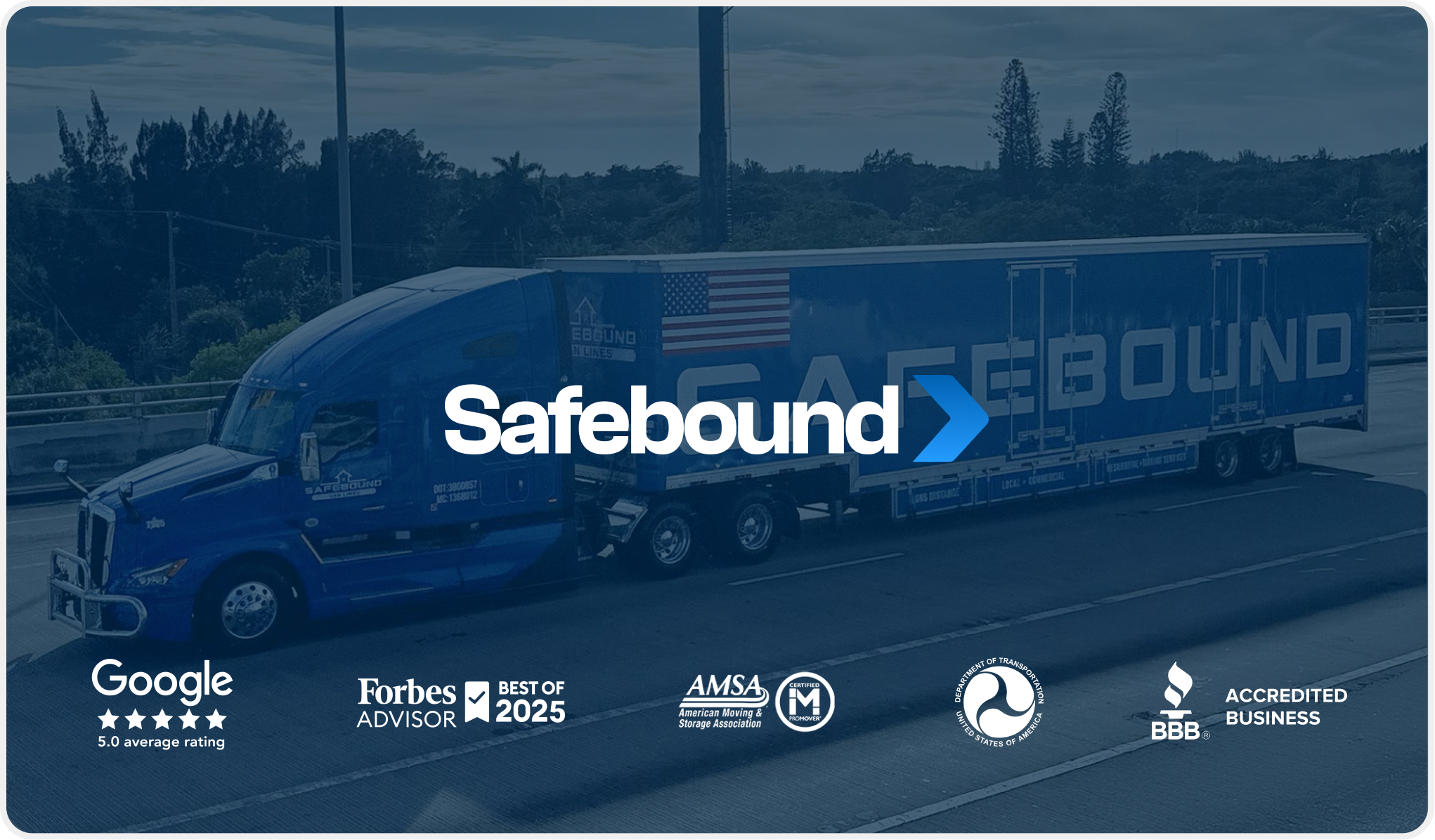
Safebound has run Florida storage-bridge moves since 2016 with a 4.9-star rating and 2,401 reviews across 35,000+ moves. The 100,000 sq ft climate-controlled facility in West Palm Beach holds goods in wooden vaults for the full bridge. Every quote ships with transparent pricing.
The sections below cover the two-move problem, the bridge plan, settlement timing, and cost.
Key Takeaways
One ship, not two moves: Storage bridges let you ship origin to Florida once and deliver to the purchase address after closing, avoiding a second move out of a rental.
Vault rate range: Climate-controlled vault storage runs $90 to $200 per vault per month in Florida, plus pickup and delivery fees.
SIT cap: Storage-in-transit under most carrier tariffs covers 90 to 180 days before converting to long-term storage at a different valuation class.
Homestead timing: The Florida homestead exemption requires the owner to own and reside in the home by January 1 of the tax year, so closing late shifts the benefit.
Avoid the dual-housing trap: Do not sign a 12-month Florida lease the same week you go under contract, or you will pay rent and mortgage at once.
The sections below walk through how each piece of the bridge lines up with the Florida purchase timeline.
Why does the two-move problem cost more than a storage bridge?
A two-move plan loads goods at origin, unloads them in a Florida rental, then loads and unloads again at the purchase address. Each handling cycle adds labor, packing material, and wear. A typical interstate move runs $4,000 to $12,000. Paying twice doubles that bill.
A storage bridge ships from origin to a Florida vault, then schedules local delivery to the purchase address after closing. Goods are handled twice instead of four times. Wood furniture, electronics, and framed art see fewer dings since they sit sealed in a vault. Safebound runs the bridge under one bill of lading, which keeps liability with one carrier. The plan fits buyers who want to move long-distance to Florida without doubling the labor bill.
How does a storage bridge work for rental to purchase?
A storage bridge is a single contract that covers origin pickup, line-haul to Florida, vault storage, and final local delivery. The crew packs and loads at origin under the interstate tariff. The truck drops the goods at the Florida warehouse. Movers load each vault, which is about 5 by 7 by 7 feet and holds 245 cubic feet. Vaults sit on racks off the floor for the full storage window.
When the purchase closes, the buyer calls the coordinator to set final delivery. The crew pulls the vaults, loads them on a local truck, and unloads at the new home. The plan trades a short-term rental for a hotel during storage. It works well when a close slips by a week or two. Safebound provides this climate-controlled storage at the West Palm Beach warehouse.
What does the storage cost look like for a 6-month bridge?
Vault storage in Florida runs $90 to $200 per vault per month at most carrier warehouses. A standard 3-bedroom home fills three to five vaults, so the monthly bill lands at $270 to $1,000. A 4-bedroom home with a garage fills five to eight vaults, or $450 to $1,600 per month. Pickup and delivery adds $250 to $600 on each end.
On a 6-month bridge for a 3-bedroom home at four vaults and $150 each per month, storage costs $3,600. Add $400 for delivery, and the bridge runs about $4,000 on top of the line-haul. That figure is lower than a second full move six months later. The written estimate prints the storage rate, pickup fee, and delivery fee on the same page as the line-haul.
How long does storage-in-transit cover before it converts to long-term?
Storage-in-transit, or SIT, is a class of warehouse storage under the carrier's interstate tariff. Most tariffs cap SIT at 90 days, with a few extending to 180 days on request. While goods are in SIT, the bill of lading and full-value protection from the line-haul stay in force. The household does not need a separate storage policy.
Once SIT expires, the goods convert to long-term storage under a new contract with its own valuation rules. Most carriers ask for a fresh inventory list and a new declared value. Rates often shift up a small amount at conversion. Safebound flags the SIT cutoff in advance. The buyer can then schedule final delivery before conversion or sign the long-term paperwork without a coverage gap. The plan also pairs with professional packing services at origin.
How should the move date line up with the settlement date?
Settlement date is the day the buyer signs closing papers and the title transfers. Lenders, title companies, and HOA approvals can push the date by days or weeks. A move set for the same week as a projected close often slips. The lender may flag a document or the title search may turn up a lien. The storage bridge absorbs the slip without a rebooking fee.
The cleaner plan is to land in the Florida vault first, then watch the closing steps and set final delivery once the lender confirms clear-to-close. The buyer has a 48- to 72-hour window from clear-to-close to fund and record. Final delivery from vault to new home can happen the day of recording or after. Buyers who want a same-day move should hold the slot two weeks out and update the coordinator when the lender confirms.
How does insurance work for goods in storage versus transit?
Goods in transit ride under the carrier's interstate liability. The buyer picks either released value at 60 cents per pound per article or full value protection at the declared value. The same liability stays in force during SIT. The buyer pays the full-value premium once on the front end, and that coverage holds.
Once goods convert to long-term storage, valuation switches to a warehouse policy. Long-term coverage is written at a flat declared value, not per pound. High-value items like art, electronics, and collectibles should be itemized with their own values. Buyers with art or collectibles should also check whether a homeowner or renter policy at origin still applies, or whether a separate moving insurance plan is needed.
Can the household pull seasonal items from storage mid-bridge?
Yes. Most Florida vault warehouses allow scheduled retrieval of one or two boxes mid-bridge for an access fee, usually $75 to $150 per visit. Common pulls are Christmas decorations in November, sports gear at season start, school items in August, and tax records in April. The household calls the coordinator 48 hours ahead, and warehouse staff pull the labeled boxes for pickup or short-haul delivery.
Retrieval works best when the origin inventory list is detailed enough to find the box by description. Boxes labeled "kitchen misc" are hard to find without opening three or four vaults. Buyers planning a bridge longer than six months should pack a labeled box for each seasonal need. Note the box number on the warehouse copy of the inventory, and staff coordinate the pull and stage the box at the door.
What tax and homestead timing matters for a Florida purchase?
Florida has no state income tax. Setting legal residence here shifts the tax base off the origin state's income tax once the move is complete. The Florida homestead exemption asks the owner to own and live in the home by January 1 of the tax year. A buyer who closes in December and moves in before January 1 qualifies that tax year. A buyer who closes in January waits a full year.
The homestead exemption cuts assessed value by up to $50,000 and caps annual rises at 3% under Save Our Homes. Buyers planning a fall close should ask the title company whether the close can be recorded before December 31. The homestead window then opens for the next tax year. Buyers who file homestead must also use the Florida address on the driver's license, voter registration, and federal tax return. This article does not replace tax advice from a licensed CPA.
5 Steps to Lock In a Rental-to-Purchase Florida Move
Get a single written estimate for the full bridge: Ask the carrier to price origin pickup, line-haul, vault storage per month, and final delivery on one document. A single bill of lading keeps liability with one carrier from origin to purchase address.
Lock the SIT window against the closing target: Map the projected close against the 90- or 180-day SIT cap. If the close is set for month six and SIT caps at 90 days, plan for a long-term storage conversion at day 91.
Avoid signing a 12-month lease the same week you go under contract: Choose a month-to-month rental or a short-stay hotel for the closing window. A 12-month lease and a mortgage closing in the same week creates dual housing costs.
Label boxes for mid-bridge retrieval: Pack a clearly labeled box for Christmas, sports, and school items. Note the box numbers on the warehouse inventory so staff can pull without opening every vault.
Time the close before January 1 if you want the homestead exemption: Ask the title company whether closing can be recorded by December 31. The exemption applies for the tax year the owner owns and resides in the home on January 1.
Frequently Asked Questions
What is a storage bridge for a Florida move?
A storage bridge is a single carrier contract that ships household goods from the origin state to a Florida warehouse vault, holds them in climate-controlled storage, and delivers to the purchase address once closing clears. The plan replaces a two-move pattern where goods are unloaded at a rental, lived with, then loaded and unloaded again at the purchase.
How much does vault storage cost per month in Florida?
Vault storage in Florida runs $90 to $200 per vault per month at most carrier warehouses. A standard 3-bedroom household holds in three to five vaults, so the monthly bill lands at $270 to $1,000. A 4-bedroom home with a garage holds in five to eight vaults at $450 to $1,600 per month. Pickup and delivery from the vault adds $250 to $600 each.
What does storage-in-transit mean and how long does it cover?
Storage-in-transit, or SIT, is a class of warehouse storage under the carrier's interstate tariff. Most tariffs cap SIT at 90 days, with some extending to 180 days. While goods are in SIT, the original bill of lading and liability protection from the line-haul stay in force. After the cap, the goods convert to a long-term warehouse contract with separate valuation rules.
Can I pull items from storage during the bridge?
Yes. Most Florida vault warehouses allow scheduled retrieval of one or two boxes for a $75 to $150 access fee. Common pulls are Christmas decorations, sports gear, school items, and tax documents. The household notifies the move coordinator 48 hours ahead and the warehouse staff pulls the labeled box from the vault for pickup or short-haul delivery.
What happens if my settlement date slips by two weeks?
A storage bridge absorbs the slip without a rebooking fee on the move. The goods stay in the vault while the lender clears the document or the title work finishes. Once the lender confirms clear-to-close, the buyer schedules final delivery for the day of recording or the day after. Safebound coordinators monitor the closing milestones with the buyer.
Should I sign a 12-month lease and start house shopping at the same time?
A 12-month lease and an active purchase contract in the same week creates dual housing costs. The cleaner plan is a month-to-month rental or a short-stay hotel during the closing window. Goods sit in vault storage and the buyer avoids paying rent and a mortgage at once. The storage rate is lower than a second month of rent in most South Florida markets.
When does the Florida homestead exemption apply?
The Florida homestead exemption applies for the tax year the owner owns and resides in the home on January 1. A close on December 30 with move-in before January 1 qualifies for that tax year. A close on January 5 waits until the next January 1 to qualify. The exemption reduces assessed value up to $50,000 and caps annual increases at 3% under Save Our Homes.
How does insurance change between SIT and long-term storage?
In SIT, the carrier's interstate liability and the declared full-value protection stay in force. After conversion to long-term storage, valuation switches to a warehouse policy with a flat declared value. High-value items should be itemized on the long-term contract with separate values.
Is a storage bridge cheaper than two separate moves?
In most cases, yes. A two-move plan pays interstate origin pickup, rental delivery, rental pickup, and purchase delivery, plus packing materials twice. A storage bridge pays origin pickup, line-haul, vault storage for the bridge months, and a single local final delivery. The bridge math wins when the rental gap runs three months or more, which is most rental-to-purchase plans.
Ready to Plan Your Rental-to-Purchase Move?
A Florida rental-to-purchase bridge starts with a written estimate that prices origin pickup, line-haul, vault storage per month, and final delivery on one bill. Get a written estimate to lock the rate and SIT window. Call 561-510-7191 to confirm crew, vault count, and projected close date with a Safebound coordinator. Learn more about Safebound Moving and Storage.
People Also Read
Short-Term Storage During a Move in 2026: Bridging the Closing Gap
Moving with a One-Month Gap Between Leases in 2026: Storage Bridge, Hotel, and Mail Forwarding
Sources & References
Safebound Moving & Storage is licensed, insured, and certified throughout Florida and the continental United States. USDOT 2900155 | MC 975408 | FL IM2839. BBB Accredited. Forbes Featured. Verify at fdacs.gov or safer.fmcsa.dot.gov.
About the Author
Leo Cavaretta | Moving Industry Specialist, Safebound Moving & Storage
A licensed and insured carrier with trained and background-checked movers headquartered in West Palm Beach, Florida, Leo specializes in interstate moving regulations, USDOT compliance, residential relocation, and moving cost transparency, helping customers navigate the full moving process, from binding estimates with transparent pricing and no hidden fees to long-distance logistics, with confidence. Since 2016, Safebound has completed more than 35,000 residential and commercial relocations across all 50 states. Safebound holds USDOT 2900155, MC 975408, and FL IM2839, and is BBB Accredited. Get a free quote or learn about Safebound Moving & Storage.
Connect: LinkedIn
or Call Now (561) 559-5725
Keep Exploring
Keep the learning going with these posts.